Pages

Friday, August 3, 2012

Exotic Ingrediants~What is Guava?

So what is a Guava? I am sure many of you have heard of them, and are trying to conjure up memories of where you have! When we lived in Claremont, my friend's mom would always make these delicious desserts with Guava paste in the center, but until recently I never really knew what it was.


"A guava is the sweet fruit of the guava tree, which grows in tropical regions of America and Asia. The genus consists of about 100 small trees and shrubs, with the Psidium guajava species being the most cultivated for food. The fruit can be eaten raw or used to flavor drinks, desserts, and sauces.
The guava is believed to have originated in an area extending from southern Mexico into Central America. Since 1526, it has been common throughout all warm areas of tropical America, the West Indies, the Bahamas, and Bermuda. It was introduced to Florida in 1847 and was brought from there to the East Indies and Guam. It is likely that it spread from those regions to Asia and Africa. It was introduced to Hawaii in the early 19th century and is now common throughout the Pacific islands.
The plant is evergreen, in the form of either shallow-rooted shrubs or trees up to 33 feet (10.05 meters) in height. The tree has a smooth copper-colored bark that flakes off to reveal a green layer underneath and has branches that spread at the top of the tree. The leaves are green and leathery. In addition to fruit, the tree also bears fragrant white flowers with four or five petals."


The guava is rich in vitamins A, B, and C, as well as beta carotene. It can be eaten raw, either out-of-hand or seeded and sliced in desserts or salads, although cooking eliminates the strong smell. The fruit is widely canned and sold for export, as is juice, nectar, and shells, which are stewed and served as a desert in Latin America and Spanish-speaking islands of the West Indies. There are countless recipes for the use of guava in pies, cakes, puddings, jellies, and chutneys, and the fruit may even be dehydrated and powdered to flavor ice cream. 


Recipe


Ingredients:
500g all purpose flour
200g unsalted butter
1 cup milk
1 tbsp baking powder
250g guava paste (for the filling)
1 egg white (beaten, to brush the top)
2 cup crystallized sugar (to coat)
Directions:
Slice the guava paste into small strips and reserve. Grease two 12×16 inches pan. Pre-heat oven to 350°F.
Mix the dough ingredients, the flour, butter, milk and baking powder. Mix until smooth. Divide the dough in two and reserve one half in a plastic bag. Roll out one half on a floured surface into a rectangle (not to thin). Cut into smaller rectangles (3×2 inches), put a guava paste strip in the center and role up the dough and pinch edge together to seal. Brush the top of the biscuits with the egg white and coat only the top with the crystallized sugar. Bake for 35 to 40 minutes (or until the bottom of the biscuits turn brown). Repeat the process with the other half.

Sources
pamalabrandao.com
wisegeek.com
wikipedia.com


On the Map~Fun facts about: France

Did you know?

1. There is a Victor Hugo street in every town in France.


2. It’s illegal to name a pig Napoleon in France.


3. France has won the most Nobel Prizes for Literature than any other country in the world, and the second most in mathematics.


4. “Let them eat cake” was a statement falsely associated with Marie Antoinette as it was created ten years before she was born.


5. The Eiffel tower was originally intended to be dismantled and sold as scrap after its construction.


6. It’s against the law to take pictures of police officers and police vehicles.


Au revoir!


Wednesday, August 1, 2012

Tutorial: Flower clip

I have seen pictures for clips like this, and a year or so ago I found a tutorial. I never did get around to making it and I lost the tutorial, so I decided to make one for you all.


Supplies needed
synthetic fabric
hair clip
hot glue gun
candle


The first thing you need is your fabric. It must be synthetic. I used this left over fabric from a shirt I made, it is 100% polyester.


These are the clips I used. They are very sturdy and perfect for the project!

Step 1: Cut three circles of fabric, make each a bit smaller than the last. Then I cut a circle of the grey lace (for the last layer).


Step 2: Hold the edges of the fabric over a candle flame, being careful not to get too close or touch the flame. (or the fabric will disintegrate) Do this for each layer. This step curls the edges and gives the fabric the "flower" look.


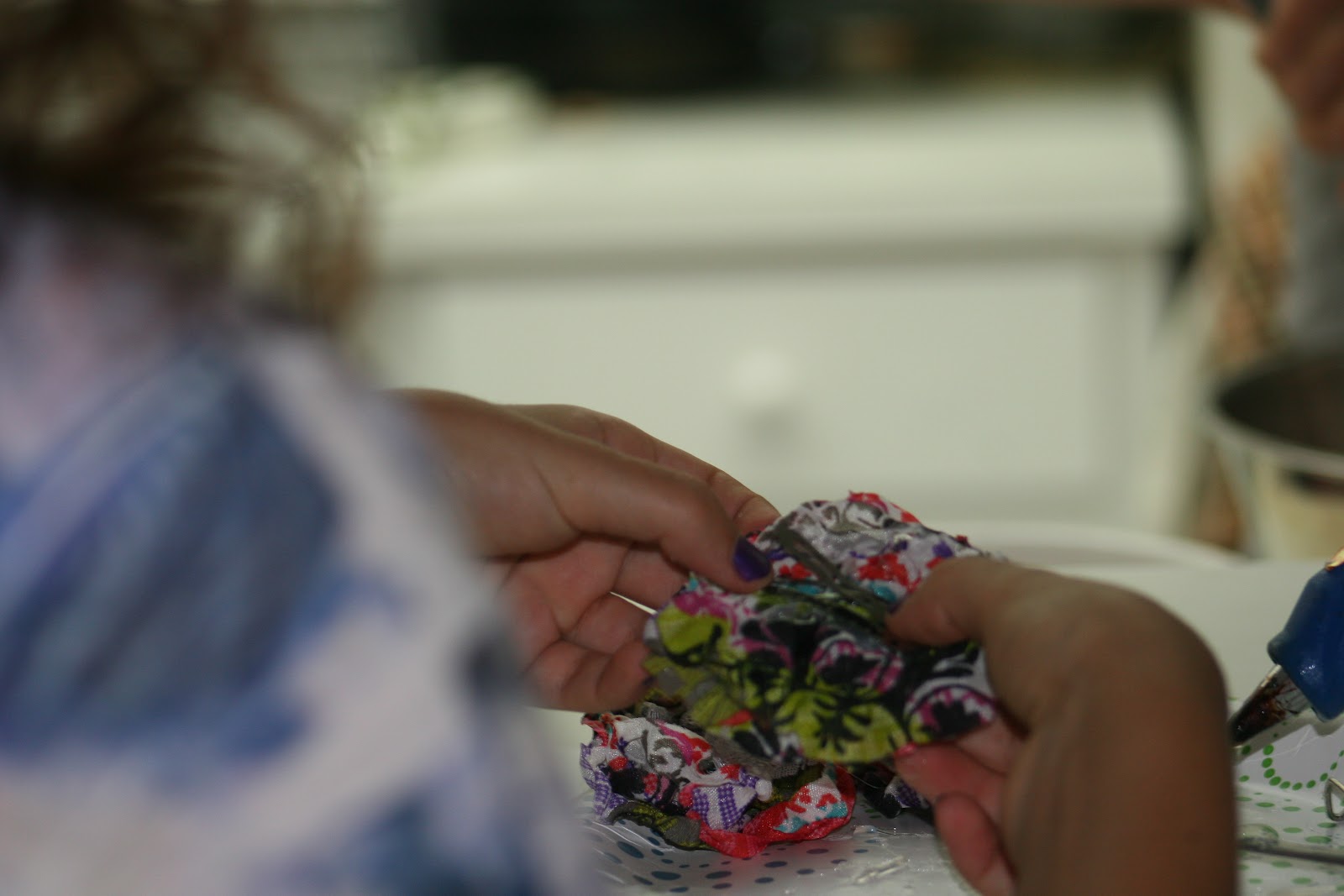
Step 3: Plug in your hot glue gun. Once it is hot, place a dab of glue on the top of the first layer, and place the next on top. Repeating this step until all of the layers are glued together.


Step 4: Open up the clip. Put a small dab of hot glue in the center of the bottom of the flower. Place the top of the opened clip on the hot glue. Make sure the glue is only on the center of the clip, not the edges, otherwise you wont be able to open and close it.


It should look like this.


Let the glue dry and your flower clips are complete! This a very simple and fun project, perfect for those fabric scraps you have laying around.


Tuesday, July 31, 2012

Thrifty Threads: Self expression

All I can really say about this outfit is, its so me!


It combines three things I love: Vests, Sunglasses, and Fedoras.


I made the vest the other day, and am so in love with it!


Tee shirt: Gap hand-me-down
Vest: Homemade*
Denim skirt: $5 aero thrift store find
Delany's Fedora: $14 from Target
Sunglasses: $5 from aero

What is Thrifty Threads?
Examples of Modest and Feminine outfits that express an assortment of styles.
Do you have an outfit that you want to share? Email us a picture and we will post it!
Requirements: please send photos directly in the email, attachments cannot be opened. Thank you!


Friday, July 27, 2012

Exotic Ingredients~What is Star Anise?

So, what is Star Anise?


Definition:
Star anise comes by its name honestly, with its star shape and a licorice taste similar to regular anise, only stronger. Star anise is the seed pod of an evergreen tree (Illicium Verum) grown in southwestern China and Japan. It is about one inch high with eight segments and a dark brown rust color. Like regular anise, star anise gets its distinctive licorice taste from a chemical compound called anethol. However the two are not related botanically - star anise is a member of the Magnolia family.

Using Star Anise in Cooking
Star anise plays a key role in the slow cooked dishes that characterize Eastern Chinese cuisine. Its licorice flavor enhances red cooked dishes, as well as eggs simmered in black tea. Star anise is one of the spices in five-spice powder.
Outside of China, star anise is featured in several of Vietnam's signature dishes, such as Pho Bo soup. It is also the secret ingredient in many Indian stews and curries. Star anise can replace regular anise in western recipes.
Medical Uses of Star Anise
In traditional Chinese medicine, star anise is prescribed as a digestive aid and to help cure colic in babies. More recently, Shikimic Acid, extracted from star anise, is one of the chief ingredients in the antiviral Tamiflu drug used to fight avian influenza.
Purchasing, Storage, and Preparation
Star anise is available in packages in Asian supermarkets. When purchasing star anise, look for whole pieces that aren’t broken. At home, store star anise in a sealed container in a cool dark place. Properly stored, star anise will last for several months. Discard once the flavor fades.
In slow cooked or simmered dishes, star anise is usually added whole (not broken into pieces) and discarded before serving. Occasionally, you may find stir-fry recipes calling for ground star anise.

Recipe: Sweet Potatoes with Star Anise, Ginger, and Lime

1 pound sweet potatoes, scrubbed and cut into 1 1/2-inch pieces
1 tablespoon olive oil
1 star anise, finely crushed
1-inch piece fresh ginger, finely grated
1 lime, zested and juiced
1/2 teaspoon kosher salt
Freshly ground pepper
Preheat oven to 425°F.
In a large bowl, combine all ingredients and toss. Arrange potatoes in a single layer on a baking sheet.
Roast for 10 minutes, then shake or flip the potatoes over. Continue roasting for 10 minutes or until tender and slightly browned.
Serve warm or at room temperature.
Variation: There's a nice depth of flavor that comes from roasting all of the ingredients together, but those who really love ginger and lime might enjoy this variation. Instead of adding the ginger, lime zest and juice to the olive oil mixture, toss them with the potatoes after roasting for a hotter and zestier flavor.

Sources:
about.com
thekitchn.com

Thursday, July 26, 2012

On the Map~Fun facts about: Poland

This weeks featured country is Poland!

Did you know?


 Polish born astronomer Nicolaus Copernicus was the first person to propose that the earth was not the center of the universe.


 Pizza in Poland does not contain tomato sauce. The waiters bring sauce to the table in a pitcher, and you pour it on top. Sometimes the sauce is just ketchup.


 In Poland, bananas are peeled from the blossom end, not from the stem end.


The name "Poland" - in Latin "Polonia" and in Polish "Polska" comes from the name of the tribe "Polanie", who used to inhabit the western part of today's country. It used to mean: people living in open fields.

Wednesday, July 25, 2012

A little bit a' humor

My kitten Duke often falls asleep while he is playing, and sometimes in some very strange positions!


Related Posts Plugin for WordPress, Blogger...
Sing to יהוה a new song, sing to יהוה, all the earth! Sing to יהוה, bless His Name, Proclaim His deliverance from day to day. Declare His esteem among the nations.


Psalms 96:1-3